

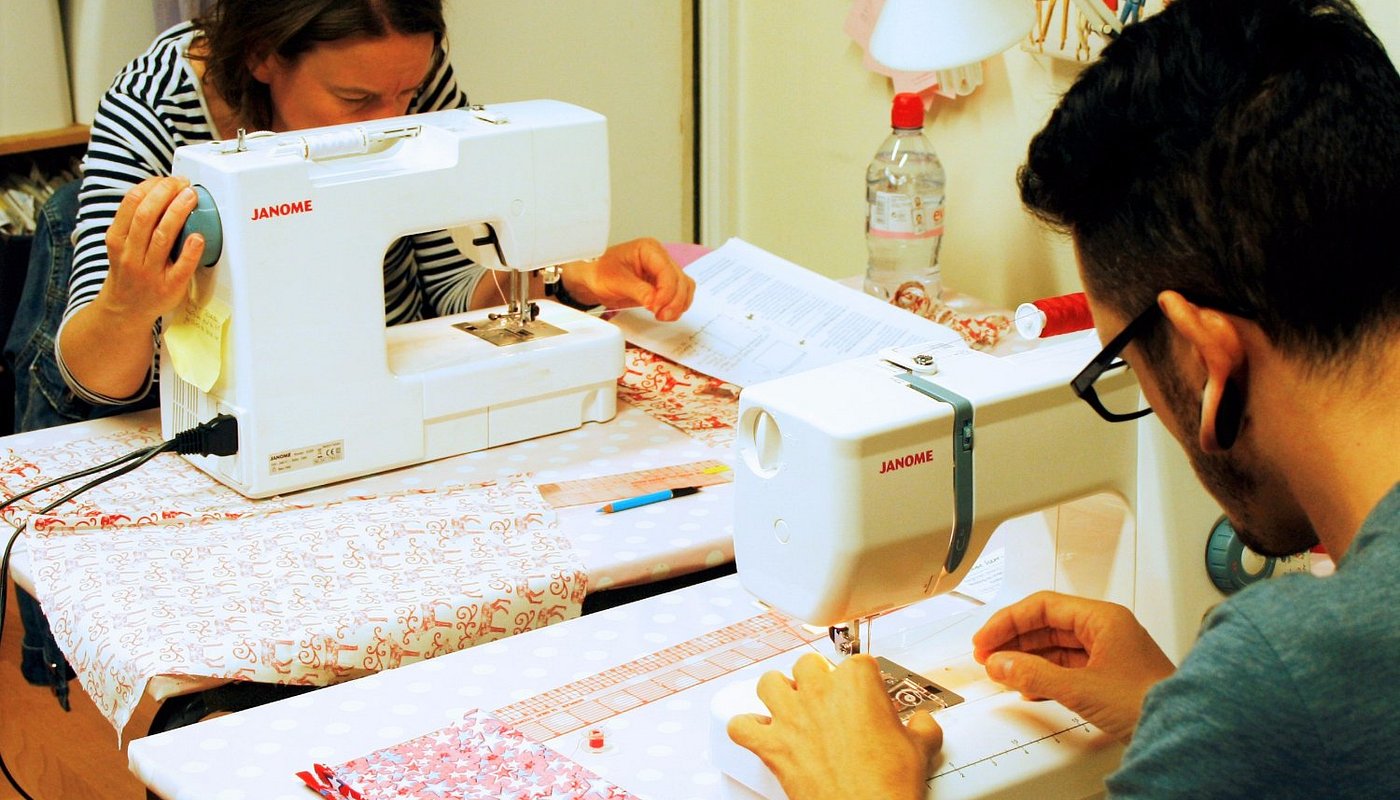
Finishing a cushion does not automatically prepare you to fit a skirt, even though both use a sewing machine. Compare sewing classes in Cambridge by the clothing skill you need next, then check the starting requirements. These five teaching options include shop tuition, private lessons and adult-education courses. Their order is not an assessed ranking, and a published course description does not confirm that a place is available on your preferred date.
Describe your current sewing ability through tasks you can do, not a label such as confident beginner. An idea saved while reading Canada Diary becomes a workable learning goal when you name the garment, fabric and difficulty. “I can sew a seam but cannot follow a pattern” tells a tutor more.
1. Sew Knit Craft
Sew Knit Craft on King Street advertises sewing and craft classes alongside one-to-one tuition. Its shop setting makes it a relevant enquiry when your learning question also involves a machine, pattern or material purchase. Ask for the session that addresses your specific gap rather than assume every workshop covers dressmaking. For example, becoming comfortable with an overlocker is a different task from learning to fit a bodice. State the equipment and outcome in your first message.
2. Cambridge Sewing
Cambridge Sewing in Oakington advertises private sewing and dressmaking tuition for beginners through advanced learners. Its current page emphasises one-to-one lessons, even though other class descriptions also remain visible. Confirm the format directly before organising friends into a group booking. It suits a learner with a defined project or a sticking point needing individual attention. Bring the pattern and explain what has already been cut or stitched so the tutor can assess the remaining work.
Ask about the physical setup if seating, vision or hand movement affects participation. Material from Red Clinic cannot determine the adjustments you personally need. Describe those requirements to the organiser and seek individual professional advice where the question is medical rather than instructional.
3. Cambridge Sewing School
Cambridge Sewing School advertises courses and classes covering sewing techniques and patterns for learners wanting to develop projects at home. It is another direct teaching enquiry, distinct from Cambridge Sewing in Oakington despite the similar names. Confirm the exact organiser and venue before paying. For a returning sewist, ask whether a course allows time to refresh machine use before moving into garment construction. Old experience can be useful without meaning every required technique is still familiar.
4. Adult Learn and Train
Adult Learn and Train publishes Cambridge dressmaking courses covering machine use, patterns, garment assembly and finishing, with beginner and evening options in its listings. It is worth investigating when a structured series of sessions fits your schedule better than a single workshop. Ask about the expected work between classes. A course may provide guided learning while still depending on progress at home. Choose the timetable only after checking whether you have access to the equipment needed between meetings.
If a garment reference came through Ontario Press, show the tutor the feature you want to learn rather than assume that exact outfit is a suitable first project. A simple-looking dress can still depend on fabric handling or fitting skills that need earlier practice.
5. Hills Road Adult Education
Hills Road’s Dressmaking for Beginners course describes core garment-construction skills over a multiweek programme, with the number of pieces completed dependent on the student’s pace. It suits someone who values a structured introduction more than a guaranteed item count. Ask about the intended project and materials before enrolling. A slower learner completing one well-understood garment may get more from the course than a faster learner rushing through several without understanding how to repeat the process.
Choose a project that teaches the missing step
| Your current obstacle | Class emphasis to seek |
| Machine controls feel unfamiliar | Basic setup and guided practice |
| Instructions are hard to follow | Pattern reading and construction order |
| Clothes do not fit as intended | Measurement, fitting and suitable adjustments |
Think of a garment as a chain of decisions rather than one long seam. Fabric choice affects cutting, cutting affects assembly and assembly affects later fitting options. A useful course explains those connections. Ask the tutor which decisions must be made before class so the teaching time is not spent correcting an avoidable purchase.
For example, a hypothetical £95 course plus £35 of fabric and notions costs £130. Those are illustrative numbers, not Cambridge fees. Compare complete project costs and supplied materials before treating a shorter or cheaper class as the better deal.
Keep the tutor’s preparation list with your booking. General reading from Red News can wait; the priority before class is the right pattern size, suitable fabric and any equipment the organiser has asked you to bring.
Questions before starting a clothing course
Should I cut the fabric beforehand?
Only if the tutor requests it. Cutting can remove options needed for fitting or correcting the layout.
Must I bring my own machine?
Check the course instructions. Ask about available machines and whether your own model is suitable to bring.
Can I work on stretchy fabric first?
Ask whether the course teaches that fabric and its construction methods. Do not assume a beginner class covers every material.
Will the course guarantee a finished garment?
Read the stated outcome and discuss your pace. Learning the process and completing an item are related but separate outcomes.
Enrol around one clothing skill
Identify the step that stops you finishing clothes, then contact the provider that teaches it. Confirm level, venue, equipment and preparation before purchasing materials. Choose a manageable project with enough time to understand the process, so the class leaves you able to continue rather than dependent on the tutor completing it.