
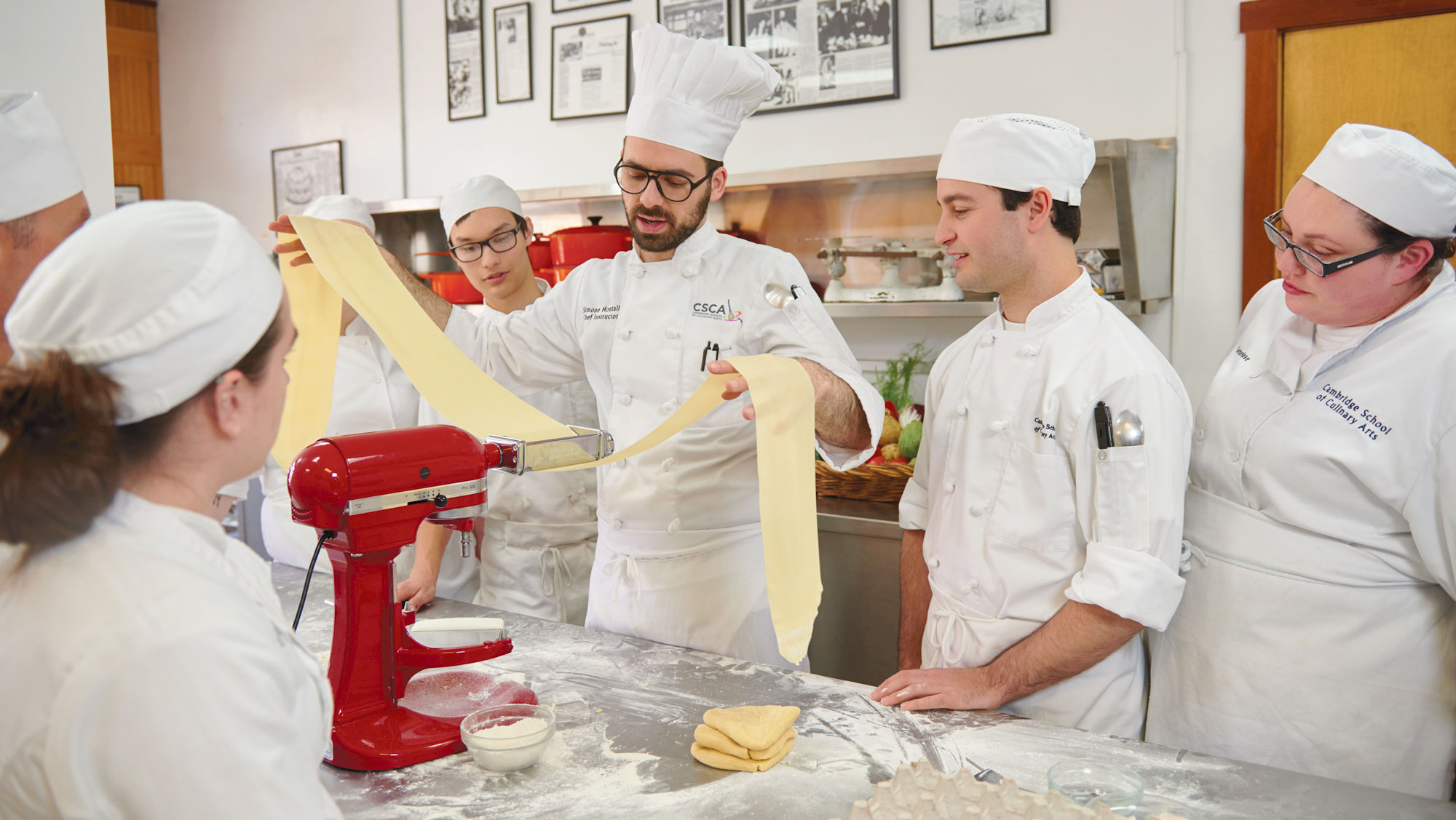
Four suitable cookery and baking providers were confirmed for Cambridge and nearby villages: Cambridge Cookery, White Cottage Baking School, Gourmandises Académie and Friday Bakery. There is no invented fifth school. [web:480][web:518][web:519][web:522] For cookery schools in Cambridge, decide between improving everyday meals and learning a specific baking skill. Two entries are outside the city, while Friday Bakery runs workshops rather than a broad culinary-school programme. The numbers organise different teaching options, not a performance ranking.
1. Cambridge Cookery
Cambridge Cookery is based at Homerton Gardens off Purbeck Road. Its website lists hands-on classes across different culinary traditions, with small-group teaching for adults, children and teenagers. [web:480][web:481] Choose it when you want to compare general cooking themes rather than focus solely on bread or cake decoration. Read the particular class description before booking. If planning the kitchen where you will practise is another task, elegant kitchen home ideas belongs to domestic browsing rather than confirming a lesson’s content or equipment.
2. White Cottage Baking School
White Cottage is an artisan bread and baking school just outside Cambridge, with a Kingston address and workshops for different skill levels. Its own website identifies Helen Underwood as the teacher behind the programme. [web:518][web:543] Consider it when bread or another baking project is the central goal. Include the village journey in the plan rather than treating it as a city-centre class. For a separate domestic organisation project, home PR blogs for kitchens is a home-themed reference, not evidence about workshop availability.
3. Gourmandises Académie
Gourmandises Académie operates from Corinne Payet’s home studio in Cottenham, near Cambridge. Its programme includes French food and patisserie, with the booking page specifying small groups of up to five. [web:519][web:542] Choose it when you want a focused cooking or baking project in that format. Ask about the exact session before assuming all classes cover the same techniques. If arranging your own kitchen is another task, home PR magazine for kitchens belongs to that domestic project rather than the academy’s teaching programme.
4. Friday Bakery
Friday Bakery offers adult baking and cake-decoration workshops alongside children’s cooking classes. Its own website describes practical guidance with modest tools and also mentions small-group bookings for friends or colleagues. [web:522][web:551] Include it when the goal is a cake or a defined workshop rather than a survey of several cuisines. Confirm the current dates directly: a displayed calendar may refer to an older sequence. For separate home preparation, home PR services for kitchens is a domestic reference without any demonstrated link to the provider.
Choose the skill you will use again
Imagine you enjoy cooking dinner but avoid baking because you do not know how to judge dough or batter. A specialist class could answer that specific difficulty better than a general entertaining menu. Tell the provider what currently goes wrong and what you want to attempt at home afterwards.
A cookery lesson works like a rehearsal for your own kitchen. The important transfer is what you can repeat with your equipment, ingredients and available time. A beautiful finished dish is encouraging, but ask what parts of the process you will actually practise.
Use a clear decision rule: choose one recurring difficulty before selecting a cuisine. Timing several components, shaping dough and decorating a cake are different skills. Once you identify the task, the shortlist becomes easier to compare.
Check whether the class is hands-on, demonstration-led or a mixture. Ask how participants work and what they take away. Preparing every stage yourself and watching a teacher perform several stages create different learning experiences; neither should be assumed from the word workshop alone.
Make the class fit your kitchen
Describe any dietary restrictions before booking, including whether substitutions are required. Ask the provider whether the actual lesson can accommodate them. Do not assume a class can simply omit an ingredient without changing the project being taught.
Find out which equipment you will need to repeat the technique. You may decide a specialised project is worth learning, but make that decision with the home requirements visible. Avoid buying a full kit before attending or receiving the teacher’s advice.
For a gift, confirm how the recipient books a date and chooses a level. Someone who enjoys eating French pastries may want a different learning experience from someone who already makes them. And allow time for the journey to Cottenham or Kingston. Those nearby-village options broaden the choice, but they do not share the same travel arrangements as Purbeck Road.
FAQs
Can I book with no cooking experience?
Check the session’s stated level. Providers may offer introductory and more advanced projects within the same programme.
Should I choose a children’s class by interest alone?
No. Confirm the age range, supervision arrangements and any practical requirements before booking.
Is a baking class useful for savoury cooking?
It may teach relevant habits, but choose it for the skill it actually covers rather than expecting a general cooking course.
Can colleagues book a private session?
Ask the provider about group availability and the proposed format. A private booking needs its own agreement, not an assumption based on public-class dates.
Book one repeatable skill
Choose a technique you want to use at home and ask the provider how its class teaches it. Confirm the level, location, practical format and dietary arrangements. Leave the lesson with a clear next attempt in mind rather than another list of equipment to buy.